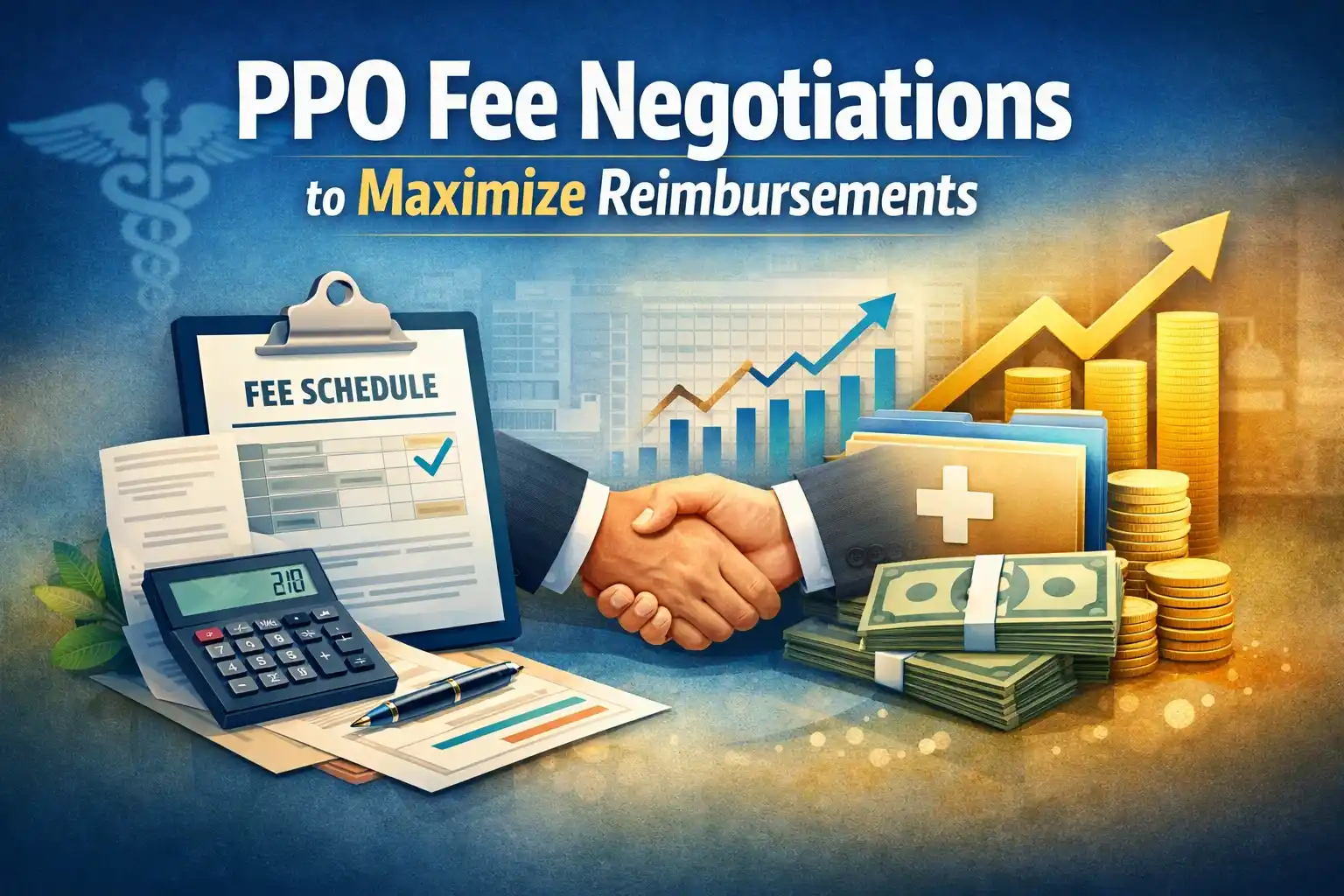
In today’s complex healthcare reimbursement landscape, PPO fee negotiations have become a critical financial lever for medical and dental practices. While many providers accept Preferred Provider Organization (PPO) contracts as non-negotiable, the reality is very different. PPO fee schedules are often negotiable—and when done strategically, negotiations can significantly improve cash flow, reduce write-offs, and strengthen long-term payer relationships.
This blog explores what PPO fee negotiations are, why they matter, when to renegotiate, and how practices can successfully approach the process to ensure fair and sustainable reimbursement.
What Are PPO Fee Negotiations?
PPO fee negotiations refer to the process of reviewing, challenging, and renegotiating reimbursement rates set by insurance companies under PPO contracts. These contracts define how much a payer will reimburse a provider for each CPT or CDT code.
Over time, payer fee schedules often:
-
Fail to keep up with inflation
-
Do not reflect rising operational costs
-
Undervalue specialized or high-quality care
Negotiation allows providers to realign reimbursement rates with the true cost of care and the value they deliver.
Why PPO Fee Negotiations Are Crucial
Many practices unknowingly lose thousands—or even millions—of dollars annually by accepting outdated or unfavorable fee schedules. Here’s why PPO fee negotiations are essential:
1. Rising Costs of Healthcare Delivery
Staff salaries, rent, supplies, technology, and compliance costs continue to increase. Without periodic fee adjustments, margins shrink even as patient volume grows.
2. Reduced Contractual Write-Offs
Low PPO rates result in higher contractual adjustments. Improved fee schedules mean less revenue written off per claim.
3. Improved Revenue Without Increasing Patient Volume
Negotiating better rates increases revenue without adding more patients or working longer hours.
4. Long-Term Financial Stability
Practices with optimized payer contracts are better positioned to withstand reimbursement cuts, policy changes, and economic uncertainty.
When Should You Negotiate PPO Fees?
Timing plays a critical role in successful PPO fee negotiations. Consider initiating negotiations when:
-
Your contract is up for renewal
-
You’ve added new services or specialties
-
Your patient volume with a specific payer has increased
-
Reimbursement rates haven’t changed in 2–3 years
-
Your practice has strong quality metrics or low denial rates
-
Operational costs have increased significantly
Negotiation isn’t a one-time activity—it should be a recurring strategic review process.
Key Data You Need Before Negotiating
Preparation is the foundation of successful PPO fee negotiations. Before contacting a payer, gather the following data:
-
Current PPO fee schedules
-
Allowed amounts vs. billed charges
-
Top 20–30 most frequently billed CPT/CDT codes
-
Payer mix and patient volume per insurance
-
Revenue contribution by payer
-
Denial rates and claim turnaround times
-
Local and regional market benchmarks
This data helps justify your request with facts, not assumptions.
Common PPO Fee Negotiation Strategies
1. Fee Schedule Analysis
Identify underpaid procedures, especially high-volume codes. Even small increases on frequently billed codes can have a major financial impact.
2. Market Comparison
Demonstrate how your current rates compare to:
-
Medicare benchmarks
-
Other PPO plans
-
Regional averages
Payers are more receptive when requests are market-driven.
3. Value-Based Positioning
Highlight what sets your practice apart:
-
High patient satisfaction
-
Specialized expertise
-
Advanced technology
-
Faster access or lower referral leakage
This positions your practice as a valuable network partner, not just another provider.
4. Tiered or Code-Specific Negotiations
Instead of asking for across-the-board increases, negotiate:
-
Specific procedure codes
-
Specialty services
-
Preventive or high-quality care codes
This approach often meets less resistance from payers.
Challenges in PPO Fee Negotiations
While beneficial, PPO fee negotiations are not without obstacles:
-
Payers may initially deny requests
-
Negotiations can be slow and bureaucratic
-
Contracts may include restrictive clauses
-
Lack of payer transparency
-
Fear of contract termination
However, termination is rare—especially when a practice has strong patient volume and network value.
Should You Accept, Renegotiate, or Drop a PPO Plan?
Not all PPO contracts are worth keeping. After negotiations, practices should evaluate:
-
Net reimbursement per visit
-
Administrative burden
-
Denial frequency
-
Patient dependency on the plan
In some cases, dropping a low-paying PPO can improve overall profitability, even if patient volume decreases slightly.
Role of RCM Experts in PPO Fee Negotiations
Many practices lack the time, data, or negotiation expertise to handle PPO discussions effectively. This is where Revenue Cycle Management (RCM) experts add value.
RCM professionals:
-
Perform in-depth contract and fee schedule analysis
-
Identify negotiation opportunities
-
Communicate directly with payer representatives
-
Track follow-ups and amendments
-
Ensure updated rates are implemented correctly
Outsourcing PPO fee negotiations often delivers faster results and higher increases than internal efforts.
Best Practices for Successful PPO Fee Negotiations
-
Be persistent but professional
-
Document all communications
-
Avoid emotional arguments—use data
-
Focus on mutual value, not confrontation
-
Revisit negotiations every 12–24 months
Consistency is key. Even small, incremental improvements compound over time.
Final Thoughts
PPO fee negotiations are no longer optional—they are a necessity for practices aiming to protect revenue and sustain growth. Accepting default fee schedules leaves money on the table and limits your financial potential.
With the right data, timing, and strategy, PPO negotiations can transform underperforming contracts into profitable partnerships. Whether handled internally or with expert support, proactive negotiation empowers practices to take control of their reimbursements and future success.